Introducing something new and confusing in a child’s education can be nerve-wracking. The mind of the educator, parents, and other caregivers is no doubt full of concern and confusion: Isn’t screen time bad for kids, will they still learn what they should, do they need it? This is normal and your concerns aren’t misplaced. But you should know there are many teachers, advocacy groups, and other organizations that work over time to answer these questions and make sure your child is receiving the best education possible. Let’s look at what they have to say to answer some of these questions, and together we can build a solid foundation of research-based information on technology in early childhood education.
Is screen time bad for kids? Short answer: it can be. The long answer, though, begins with (1) establishing what type of screen time educators and parents are talking about and (2) examining recommended guidelines on technology use. In a statement released by the National Association for the Education of Young Children (NAEYC) on technology as a tool for early childhood programs, organization members clearly define the difference between interactive media and non-interactive media (NAEYC & Fred Rogers Center, 2012).

Non-interactive media is likely the first thing that comes to mind when you imagine a child interacting with technology. It’s the silly YouTube videos that have no educational value with characters that talk a little too loud, or the 30 second TikToks that play on a loop when you drop your phone under your bed and can’t grab it. These forms of media involve little to no cognitive engagement, especially compared to interactive play and hands-on activities. They are solely for entertainment, not educational enrichment.
Interactive media, as defined by (NAEYC), includes things like software programs, apps, e-books, websites, etc., that are made to create opportunities for active use, encourage social interaction, and facilitate creativity among young children (NAEYC & Fred Rogers Center, 2012). Think of Starfall Education, the non-profit website with games, books, and reading programs for Pre-K students or Kahn Academy Kids, an app that uses animated characters to teach ELA concepts in a fun and engaging way. These websites are purposefully reciprocal and can be used for creativity or group work.
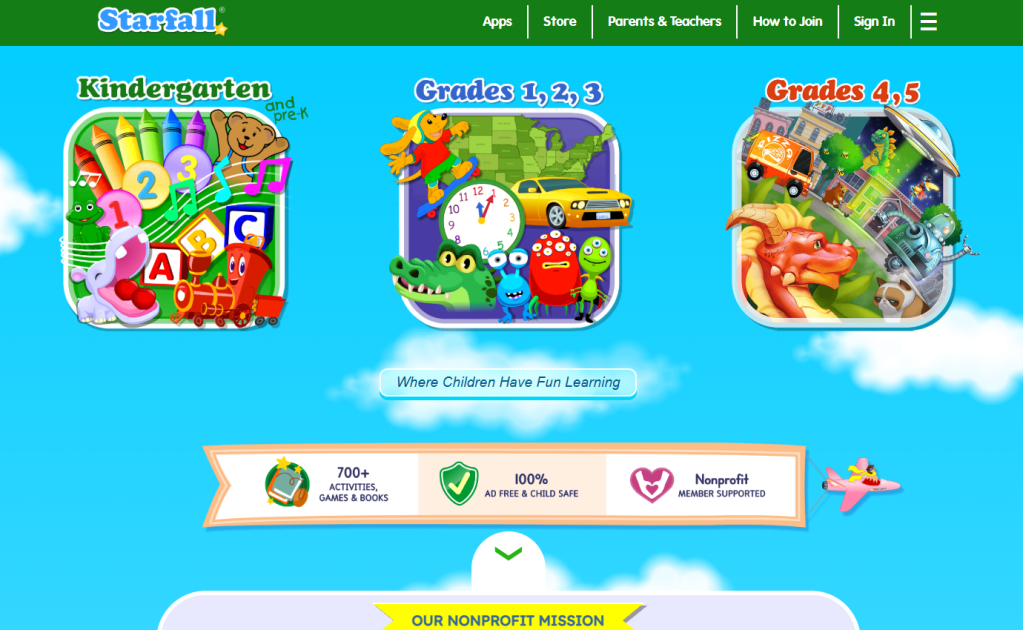
The type of technology educators are talking about is interactive. There is no time or desire for doomscrolling in the preschool classroom, but there is room for technology to be used as a tool to enhance learning.
The second part of the long answers involves something parents and educators should pay attention to no matter what type of technology is being used, which is the American Academy of Pediatrics’ (AAP) recommendation for technology use in young children. These guidelines are used to inform parents, educators, and other caregivers on how much screen time is okay for different ages.
For infants and toddlers below two years old: Screen time is not recommended and should be avoided unless used to stay connected with friends or family through video calling and similar activities (Munzer et al., 2026).
For preschoolers and up: Screen time is recommended as long as it is limited (1 hour for a full day preschool attendee) and focuses on education, social interaction, and promoting learning (Munzer et al., 2026).
Within guidelines, using high quality material, technology can be very beneficial as a tool for learning. In this way, screen time is not bad for your kids.
Will kids still learn what they should if teachers use technology? Yes, they will. Among the technology and early education discourse, there is fear that reliance on technology can hinder social development and language learning. If your kid or your student is sitting at a computer playing “It’s Fun to Read” on Starfall, how will they learn to talk to others? This is a fair concern, but luckily, there is research to show that technology will not get in the way. In many classrooms, technology has actually been associated with enhanced language diversity and facilitated social interaction (Fantozzi et al., 2018; Quesenberry et al., 2016). The important factor here is how the educator incorporates technology.
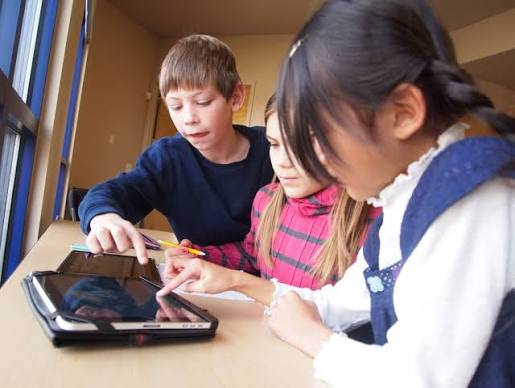
For example, in the article Play and Technology: An Important Intersection for Developing Literacy the author Ms. Fantozzi, explains how she used a tablet in her classroom for creation, collaboration, and communication. As an educator, Ms. Fantozzi used her established knowledge intentionally to inform her practices with technology, incorporating it into play in a beneficial way.
In the article Tuning in: Strategies for Incorporating Technology Into Social Skills Instruction in Preschool and Kindergarten, Amanda Quesenberry details a step-by-step guide for educators to choose technology based on her experiences and successes. This guide includes planning and selection, introduction, and evaluation of the technology and its implementation.
When educators use their qualifications and experiences – their teacher senses – technology can still be used to teach the fundamentals of school curriculum. This is true for parents and other caregivers as well. It is up to us to evaluate the technology we want to use, to educate ourselves on how it should be used, and then to observe the affects it has on our children. As long as we make sure they do, kids will still learn what they need to.
Do kids need to use technology? Whether they need to or not, kids in this generation and every generation after will be using technology. Children now are referred to as “digital natives,” because they are growing up in a time when there has never not been technology (Mathews, 2026). With easy access to the internet, computers, smart phones, and tablets, it is critical that children learn and develop healthy habits around technology use. These habits are developed through observation and practice. If children are not shown how to use technology for learning, and never given the opportunity to do so, they may struggle to pick up this skill in the future.
In another article by Ms. Fantozzi (2012), Exploring Elephant Seals in New Jersey: Preschoolers Use Collaborative Multimedia Albums, she points out that children in the modern world need multiliteracy. That is, they need to be able to read and write via multiple forms of communication, both digital and in real life. This is a skill now required in school and the job field. Think of how often you see “Proficient in Microsoft Office” on a job listing or the amount of school work you or your children were assigned online. Allowing children to get a head start on using technology to foster social interaction, collaboration, and creativity, will set them up for a successful academic and professional future.

Along with the required skills gained through technology use, there are also valuable benefits. Technology can increase access to learning tools, support, and family while providing a new method of self-expression and collaboration (Mathews, 2026). Students who need that extra push can find help on educational websites, or use assistive technology to learn better. Teachers can share their adventures with students and promote exploration and curiosity. Preschoolers can interact with the class iPad to make videos about their art projects and share it with parents. The possibilities are endless, but it is our job to discover them.
Moving forward, I hope you can look back at this post when you start to worry, and feel a little bit more at ease. This is only the beginning!
References:
Fantozzi, V. B. (2012). Exploring elephant seals in New Jersey: Preschoolers use collaborative multimedia albums. Young Children, 67(3), 42–46, 48–49. https://www.jstor.org/stable/42731172
Fantozzi, V. B., Johnson, C. P., & Scherfen, A. (2018). Preschool: Play and technology: An important intersection for developing literacy. Young Children, 73(2), 88–93. https://www.jstor.org/stable/26558926
Mathews, M. (2026). Diversity in the lives of children and families. Department of Human Development and Family Science, University of Missouri.
Munzer, T., Parga-Belinkie, J., Milkovich, L. M., Tomopoulos, S., Ajumobi, T., Cross, C., Gerwin, R., & Madigan, S., & Council on Communications and Media. (2026). Digital ecosystems, children, and adolescents: Policy statement. Pediatrics, 157(2), Article e2025075320. https://doi.org/10.1542/peds.2025-075320
National Association for the Education of Young Children, & Fred Rogers Center for Early Learning and Children’s Media at Saint Vincent College. (2012). Technology and interactive media as tools in early childhood programs serving children from birth through age 8.
Quesenberry, A. C., Mustian, A. L., & Clark-Bischke, C. (2016). Preschool and kindergarten: Tuning in: Strategies for incorporating technology into social skills instruction in preschool and kindergarten. Young Children, 71(1), 74–81. https://www.jstor.org/stable/ycyoungchildren.71.1.74


Leave a Reply